
Frequently Asked Questions
Are the lawn, tree, and shrub products you use safe for the environment and pets?
The products we use require thorough testing by EPA and other federal and state agencies. Lawn care professionals know to apply the products at the proper label rates and use the least amount possible to obtain good results.
How long after a treatment can I let my children and pets play on the lawn?
Generally, we recommend that you keep children and pets off of the lawn for a couple of hours after a liquid treatment.
How long after a lawn, tree, or shrub treatment will I see results?
You should see results 2 – 3 weeks after the first lawn, tree, or shrub treatment, as long as the weather conditions are conducive to optimizing the treatment.
Do you offer an organic program or all-natural treatments?
We do not have a 100% organic program since there are no organic controls for crabgrass and broadleaf weeds that give commercially acceptable results. However, in our fertilizers we do use an organic base and are offering a bio-stimulant treatment to help root hardness.
When is the best time to seed my lawn?
Fall is the best time to aerate and seed lawns in our area since soil and air temperatures are optimum for germination and lawn establishment. In addition, lawn seeding is ideal in the fall since there is less weed competition at that time.
Why does my lawn need soil testing?
For one reason, the Maryland Department of Agriculture requires that all professional lawn care companies conduct a soil test on their customer’s property within one year of commencement of any fertilization treatment program. Also, it is important on an agronomic level that we know what the condition of your soil is to make our best recommendations for your lawn’s health.
Do you have anything to control moles and voles in my lawn?
There are no good chemical means to control moles or voles. However, there are many home remedies that can help reduce the population of moles in your lawn.
How often should I aerate my lawn?
Soils in central Maryland usually contain a large amount of clay. This soil type becomes compacted from foot and mower traffic, especially in wet years and on irrigated turf. Also, turf that is thatchy benefits from aeration. Heavily compacted and/or thatchy lawns should be aerated every year. Less compacted/thatchy lawns can be aerated less often.
Do you offer other services that will further improve my lawn’s health?
We offer lawn, tree and shrub treatments to prevent and control grubs and other turf damaging insects. We also offer lawn disease control to keep your grass healthy and green. In addition, we provide supplemental nutrient treatments and can apply a nutrient or soil amendment such as phosphorus, potassium, and limestone if your soil sample results demonstrate a need.
I live in an area that is prone to deer and am concerned about Lyme disease. Do you have lawn, tree, or shrub treatments for deer tick control?
We do offer a flea and tick program that helps to minimize ticks in the lawn and landscape beds. It will also help protect your dog from fleas and other types of ticks.
Do you offer services for pests that enter the house?
We do have a perimeter pest program that helps to minimize the many soil pests that can enter the house through the foundation. Such pests are ants, ticks, fleas, earwigs, pillbugs and crickets.
Watch Us In Action



Read All About It
Summer Weeds
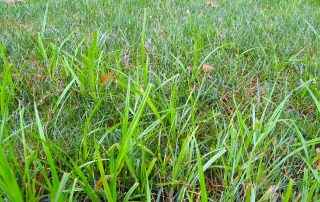
Weeds that appear in hot summer weather are some of the toughest to control. They germinate when your lawn is under stress from heat, humidity, and drought and thrive under these conditions. Some summer weeds are grass-like and are not susceptible to 'normal' weed control measures. Here are some of the weeds you will be seeing during [...]
Maryland Lawn Diseases
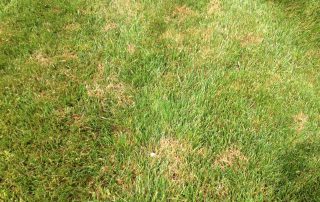
Disease pathogens are present in most lawns and can be triggered when lawns are stressed and weather conditions are right. Typically in warm, humid weather. Prevention is the best strategy for managing lawn diseases. Proper mowing, fertilization, improving poor drainage and increasing air circulation will help fend off serious problems. Fungicides can be applied preventively but will [...]
Put a Stop to Grass-Destroying Grubs
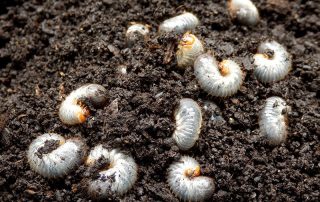
Spring is finally here, and along with the beautiful weather and green lawns come the inevitable pests. Per the U.S. Department of Agriculture, pests cause more than 200 million dollars’ worth of turf damage annually! One of the main culprits? White grubs, inconspicuous pests that do their damage under cover. Don’t let your lawn be part [...]
Lawn Mushrooms
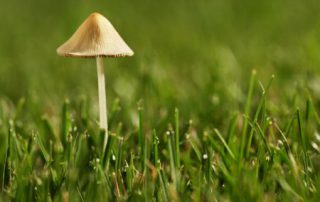
Though we can’t control mushrooms directly, there are management practices that can reduce them. Mushrooms in your lawn call for different measures than standard lawn weed control. Mushrooms are classified as fungi, rather than weeds. Most mushroom-producing fungi in lawns are actually beneficial, because they break down organic matter, releasing nutrients that promote plant growth. Mushrooms [...]
Lawn Care Benefits
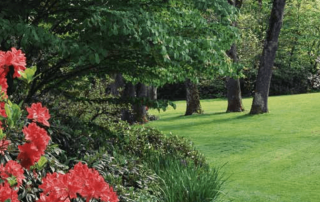
A healthy, well-maintained lawn has many benefits. It's not just about getting a green lawn. Properly timed and applied fertilizer actually protects the Chesapeake Bay by providing dense root mass that stops soil erosion and leaching of the fertilizer. A healthy lawn is an excellent sequester of carbon, provides noise and dust reduction and a safe playing [...]